


Every role in your organization is changing shape. The World Economic Forum’s Future of Jobs Report 2025 puts a number on just how much: employers expect close to 40% of the core skills their people use today to change by 2030.
AI is quietly redrawing what “the job” actually means, career paths that once ran in a straight line now branch sideways as often as up, and the skills someone needed two years ago aren’t necessarily the ones that will keep them valuable two years from now.
In a world moving this fast, career development has stopped being a nice-to-have HR programme and become one of the sharpest levers a business has.
Organizations that get this right keep their best people growing with them. Organizations that don’t watch that talent walk out the door, often for a competitor who simply asked the right question at the right time.
Most organizations aren’t failing at career development because they don’t care. They’re stuck in traps: habits and systems that made sense a few years ago and have quietly become the thing holding growth back.
Here are seven of the most common, and what to do instead.
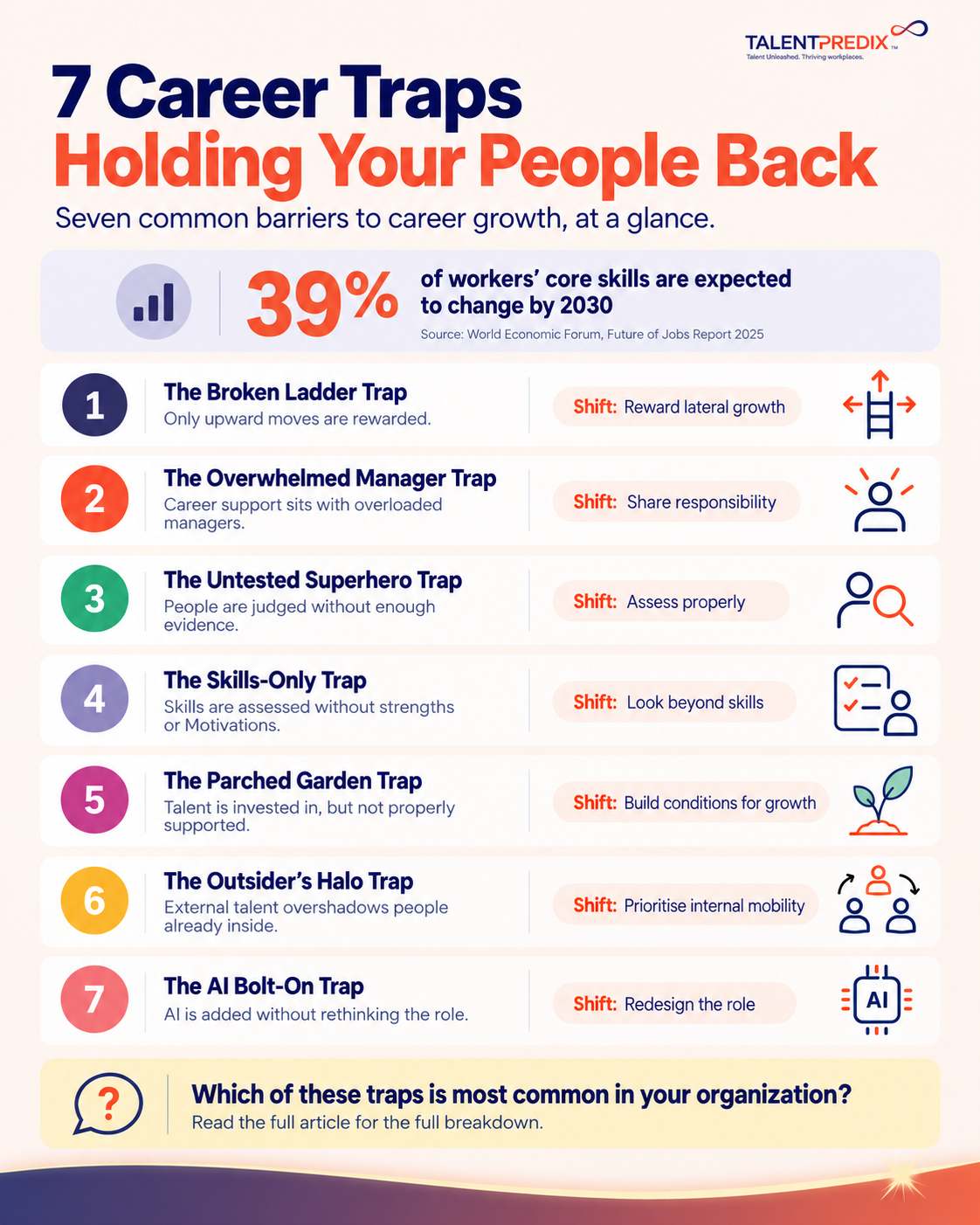
1. The Broken Ladder Trap
Most organizations claim that they support sideways and diagonal moves. However, promotion, pay, and recognition systems still often only recognize moving up.
The Shift: Reward lateral and other squiggly career moves in the organization so people feel it won’t be career limiting to pursue technical and other non-management career paths.
2. The Overwhelmed Manager Trap
Career conversations get handed to overloaded managers with no time, training, or incentive to run them well.
The Shift: Keep managers involved, but don’t leave them solely responsible.
3. The Untested Superhero Trap
We judge people on a CV and an informal interview, without ever testing whether the underlying capability and motivation is real.
The Shift: Use rigorous, evidence-based methods, including structured interviews, strengths and skills profiling, and realistic work simulations, before making significant placement, promotion, or development decisions, not just at hiring.
4. The Skills-Only Trap
Skills show what someone can do, not whether they’ll thrive doing it.
The Shift: Pair skills data with an assessment of Strengths and Motivations before making placement decisions, so people move into roles they’re not just capable of doing, but built to thrive in.
5. The Parched Garden Trap
Organizations invest in talent but not in the coaching, trust, and psychological safety that let it actually grow.
The Shift: Invest in developing and motivating leaders at all levels who can create the right conditions for people to perform, adapt, and thrive.
6. The Outsider’s Halo Trap
A polished stranger looks more capable than the colleague already in the room, simply because we haven’t seen their flaws yet, even though internal moves are cheaper, faster, and enhance attraction, retention, and engagement.
The Shift: Make internal mobility genuinely visible and competitive.
7. The AI Bolt-On Trap
AI gets bolted onto the old job instead of triggering a rethink of what the job should become.
The Shift: Use AI as the trigger for real job redesign involving those who will be impacted, not just a new tool to learn.
Escaping the Career Development Traps
None of these traps mean your organization has got career development wrong. Each started as a sensible response to a real problem; the world just moved faster than the systems built to keep up with it.
The opportunity is that they’re your systems, which means you’re the one who can change them.
The organizations that move first won’t just attract and retain their best people. They’ll build a workforce that can adapt as fast as the world around it keeps changing.
Want to See Where Your Organization Sits?
Book a discovery call with the TalentPredix™ team and we’ll help you identify which of these traps is costing you the most right now, and the fastest route out of it.

Author: James Brook
James Brook FCIPD is the Founder and Managing Director of TalentPredix™, a business psychologist, executive coach and talent and strengths assessment expert with more than 30 years’ international experience. He previously founded Strengthscope® and held senior HR and talent leadership roles at Yahoo!, NatWest and Novo Nordisk.

